
The Global History of Dumplings: Origins, Culture, and Evolution
From medicinal roots in Han-era China to Silk Road diffusion and modern soup-dumpling engineering, this guide traces how dumplings became a global language of comfort.
The steam rose from the heavy bamboo basket like mist over a mountain pass, carrying with it the scent of toasted sesame oil, ginger, and scallions. Master Zhang lifted the lid, and there they sat: a dozen perfectly pleated crescent pockets, translucent and plump.
"To understand the dumpling," Zhang said, dipping one into a saucer of dark black vinegar, "is to understand how humanity survived the cold, conquered geography, and turned scraps into art."
For Bistropedia, the story of the dumpling isn't just a culinary history—it is the ultimate tale of human migration and ingenuity.
Act I: The Frostbitten Origin
Every great food has a myth, but the dumpling’s origin story is rooted in medicine.
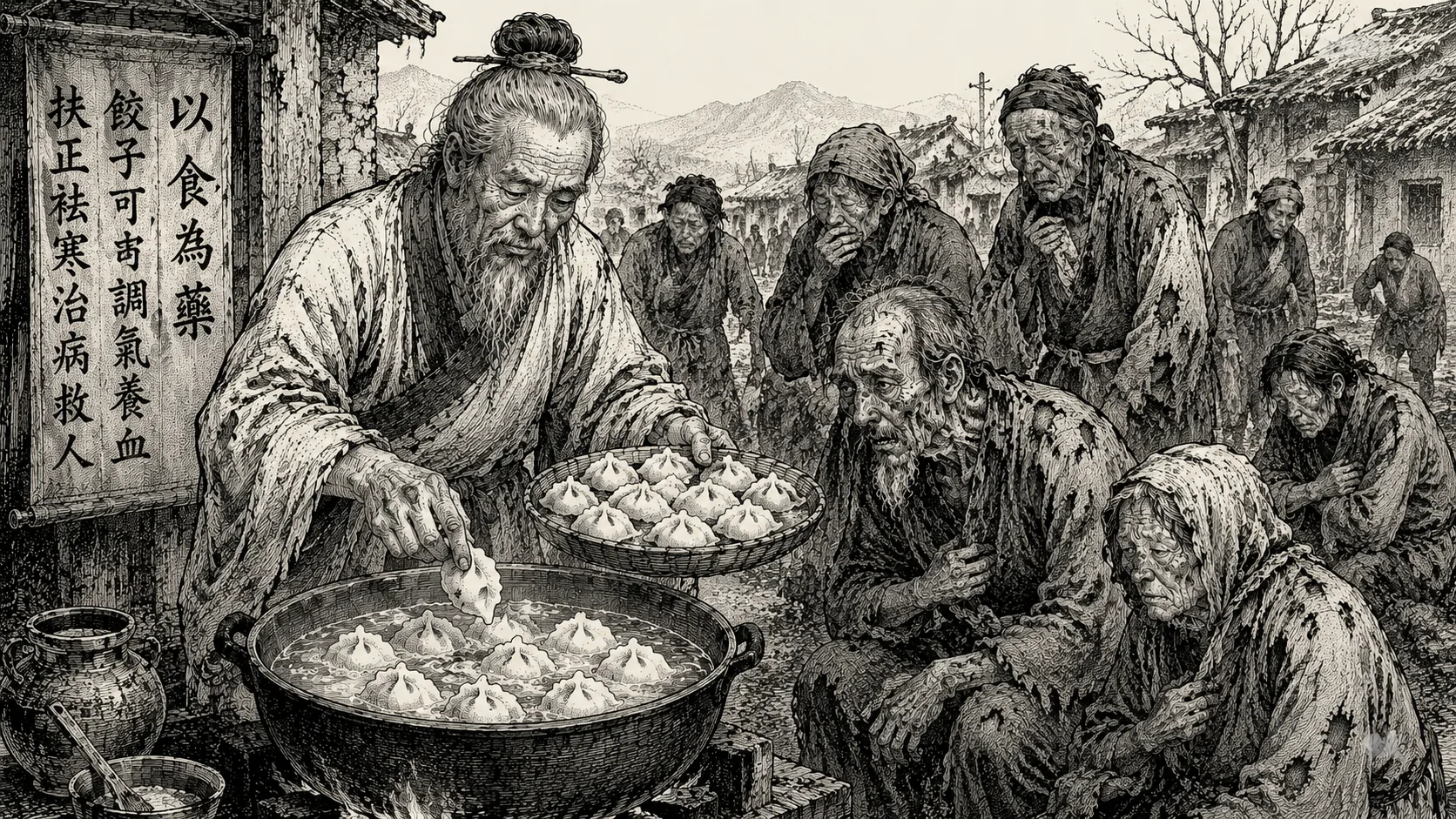
According to Chinese folklore, during the late Eastern Han Dynasty (around 200 AD), a legendary physician named Zhang Zhongjing returned to his ancestral village during a bitter winter. He found the villagers suffering from poverty, famine, and severe frostbite, particularly around their ears.
Determined to help, the physician concocted a remedy. He minced lamb, chili peppers, and warming herbs, wrapped them in small scraps of dough, and folded them to look like human ears. He boiled these dough pockets in a rich broth and distributed two "ears" and a bowl of soup to every ailing villager.
The medicine worked. The blood circulated, the ears healed, and the villagers were saved. They called these dough pockets jiao'er (tender ears), the direct ancestor of today’s jiaozi. What began as a winter panacea evolved into a symbol of luck, wealth (as their shape resembles ancient silver ingots), and the warmth of family during the Lunar New Year.
Act II: The Silk Road and the Great Diffusion
As trade routes expanded along the Silk Road, the concept of wrapping meat in dough packed its bags and traveled across continents. The dumpling proved to be the ultimate traveler's food: portable, filling, and a brilliant way to stretch a small amount of precious meat using abundant flour.
As the idea traveled, it adapted dynamically to local terrains, climates, and cultures:
Westward to Central Asia: The nomadic peoples adopted the dumpling, shrinking it or expanding it based on available heat sources. In Uzbekistan and Turkey, they became manti—sometimes tiny, delicate pockets served with garlic yogurt, or larger, hearty steamed parcels.
North to the Tundra: Moving into the freezing plains of Siberia, Russian hunters created pelmeni. They filled thick dough with minced beef, pork, or horse meat, froze them instantly in the snow, and carried them as indestructible, high-energy rations that could be boiled over a campfire in minutes.
The European Metamorphosis: In Eastern Europe, the dumpling took a comforting, starchy turn. The Polish pierogi and Ukrainian varenyky welcomed local fillings like mashed potatoes, farmer’s cheese, sauerkraut, and even sweet berries, fried in butter and topped with sour cream.
Act III: The Industrial Evolution & Modern Influence
In the 20th and 21st centuries, the dumpling transformed from a humble home-cooked meal into a global culinary obsession.
The Engineering of the Soup Dumpling
Nowhere is the dumpling's culinary influence more apparent than in the global phenomenon of the Xiao Long Bao (Shanghai Soup Dumpling). Created in the late 19th century in Nanxiang, it turned dumpling-making into high-level engineering. By mixing chilled, gelatinized pork broth (aspic) into the meat filling, chefs realized that the heat of the steamer would melt the gelatin back into liquid gold inside the wrapper.
Today, restaurants like Din Tai Fung have standardized this craft into a global religion, where chefs meticulously weigh dough to the gram and pinch exactly 18 pleats into every single wrapper.
The Street Food Equalizer
From the crispy, pan-fried gyoza found in Tokyo's neon-lit alleyways to the fiery, spice-laden momo served from roadside carts in Kathmandu, the dumpling has become the universal street food. It crosses socio-economic barriers. It is equally at home in a three-Michelin-star dim sum parlor or a plastic stool joint down a hidden alley.
The Bistropedia Takeaway
The dumpling is proof that human beings, no matter how far apart they live, share the same fundamental instinct: to take what little we have, wrap it in a blanket of comfort, and share it with someone we love.