
Twice-Cooked Pork: a flavour memory in Sichuan daily life
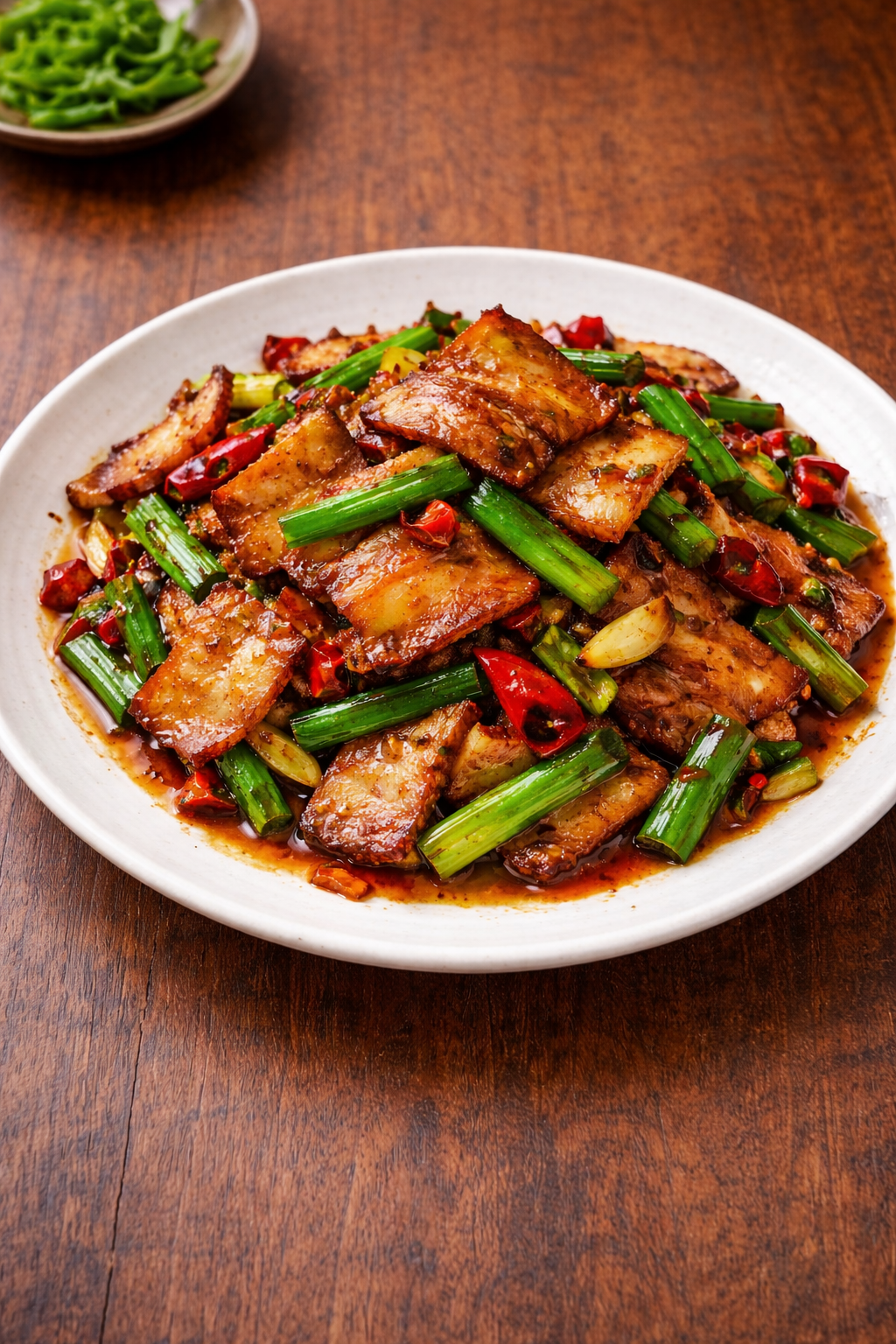
In the world of Sichuan cuisine, twice-cooked pork (hui guo rou) is often called the “king of home cooking.” It is not a courtly delicacy, nor a rare treasure, yet thanks to simple knife work and skilful wok technique it has entered countless households and accumulated deep regional cultural meaning.
From ritual to everyday table
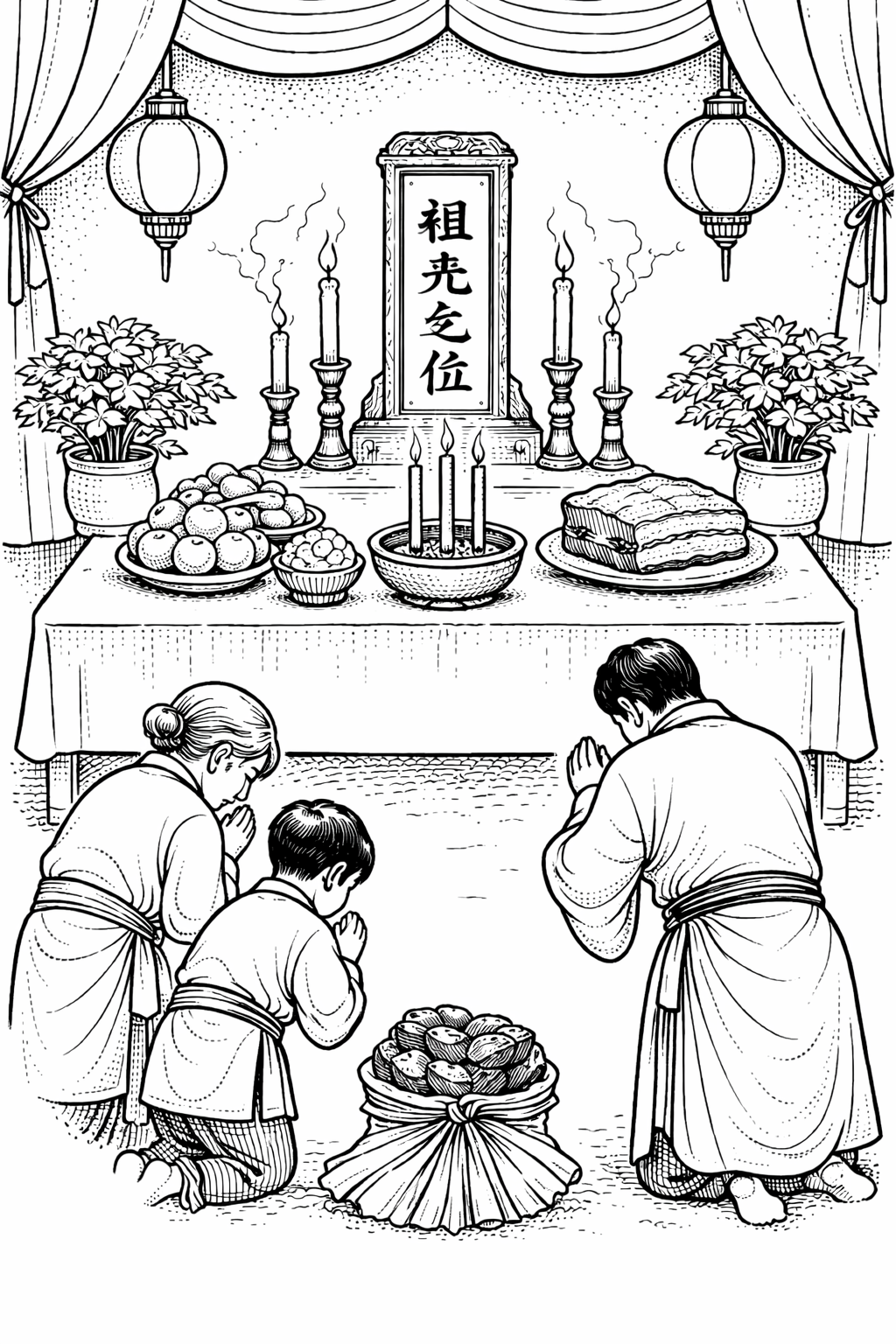
Legend says that in old rural Sichuan, a whole slab of pork would be boiled for offerings during festivals and ceremonies. After the ritual, the meat would not be wasted but returned to the wok and stir-fried — thus the name “double-cooked.” This practice reflects a cultural logic: offerings first, then shared meal; eating together completes the family blessing.
A local food philosophy
Old Sichuan cooks say double-cooked pork tests your control of heat and balance. You must manage the simmer and then the wok’s breath when frying — not too oily, not too plain; not too spicy, not flavorless. This “just right” balance mirrors an approach to life: measured, neither rushed nor lax.
The dish harmonizes coarse and fine, thick and thin, spicy and aromatic. The pork carries the scent of the hearth but becomes layered and refined through the second cooking — like ordinary life that reveals its richness when carefully tended.
Why Sichuan claims it
While cooking pork twice exists elsewhere, Sichuan made it famous. Visitors tasting it here often remark on its lively character — a “festive energy” in the bite. That energy reflects Sichuan values: bold flavor, convivial tables, and a warmth that invites gathering.
Back to Sichuan CuisineSichuan Restaurants in Washington, DC and Surrounding Areas
Here are nearby restaurants grouped by state; choose a region to view local options.
| Place | Address | Phone | Website |
|---|---|---|---|
| Astoria DC | 1521 17th St NW, Washington, DC 20036 | (202) 754-0065 | website |
| Sichuan Pavilion | 1814 K St NW, Washington, DC 20006 | (202) 466-7790 | website |
| Da Hong Pao | 1409 14th St NW, Washington, DC 20005 | (202) 846-7229 | website |
| New Big Wong Chinese Restaurant | 610 H St NW, Washington, DC 20001 | (202) 628-0491 | — |
| Szechuan House | 515 8th St SE, Washington, DC 20003 | (202) 547-8160 | website |
| Capital Szechuan | 5305 East Capitol St SE, Washington, DC 20019 | (202) 581-5432 | website |
| Reren Lamen & Bar | 817 7th St NW, Washington, DC 20001 | (202) 347-1399 | website |
| Tiger Fork | 922 N St NW (Rear), Washington, DC 20001 | (202) 733-1152 | website |
| Chang Chang | 1200 19th St NW, Washington, DC 20036 | (202) 570-0946 | website |
| Panda Gourmet Fusions | 2700 New York Ave NE, Washington, DC 20002 | (202) 636-3588 | website |
| Place | Address | Phone | Website |
|---|---|---|---|
| Chuan Tian Xia | 5700 Fishers Ln Ste A, Rockville, MD 20852 | (301) 860-8888 | website |
| Kung Fu 12 Szechuan | 14921 Shady Grove Rd Ste D, Rockville, MD 20850 | (240) 778-0999 | website |
| Yi Pin | 16051 Frederick Rd, Derwood, MD 20855 | (301) 750-3888 / (301) 750-6888 | website |
| B2J Fish Soup | 9629 Lost Knife Rd, Gaithersburg, MD 20877 | (240) 243-6987 | — |
| Peter Chang Gaithersburg | 637 N Frederick Ave, Gaithersburg, MD 20879 | (240) 912-4962 | website |
| Chef Lee’s Element | 521 Quince Orchard Rd, Gaithersburg, MD 20878 | (240) 650-5188 | website |
| Lao Sze Chuan | 20 Paseo Dr, North Bethesda, MD 20852 | (301) 968-2096 | website |
| Place | Address | Phone | Website |
|---|---|---|---|
| Hong Kong Palace | 6387 Seven Corners Center, Falls Church, VA 22044 | (703) 532-0940 | website |
| Sichuan Legend | 9992 Main St, Fairfax, VA 22031 | (571) 536-7780 | — |
| Mama Chang | 3251 Blenheim Blvd Ste 101, Fairfax, VA 22030 | (703) 268-5556 | website |
| Yu Noodles | 11217-C Lee Hwy, Fairfax, VA 22030 | (703) 877-0818 | website |
| Chopin Noodle House | 11264 James Swart Cir, Fairfax, VA 22030 | (254) 781-3028 | — |
| Nanjing Bistro | 11213 Lee Hwy Ste C, Fairfax, VA 22030 | (703) 385-8686 | — |
| Chili Wok | 335 Maple Ave E, Vienna, VA 22180 | (703) 223-5060 | website |